How to Spot Financial Scams: A Guide
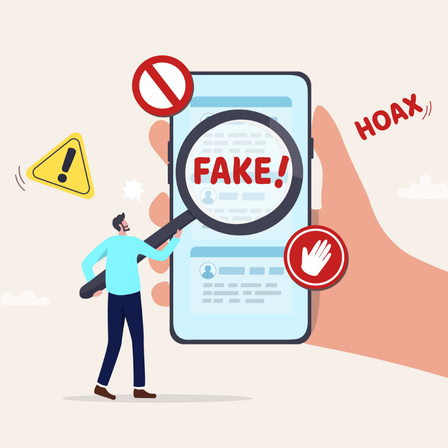
Ever received a dubious-looking email that features a request to reply with your bank details? Or perhaps you’ve almost been duped when a convincing text, professing to be from Amazon or another household name retailer, asked you to ‘click on this link’ and send over identifying personal information.
In this guide, we share with you some tell-tale signs that the email/text/letter you received is from a scammer.
Is it a ‘cold’ phone call, email, or text?
If you’ve been contacted out of the blue – known as a ‘cold’ call, email, or text – this could well be the first sign that something’s not quite right, particularly if the person contacting you asks you to hand over personal information or payment details.
Legitimate organisations typically won’t ask for sensitive information if you’re not expecting them to, explains Which? in an article that focuses on identifying scams.
‘If you’re not 100% convinced about the identity of a caller, hang up and contact the company directly’, states Which?
Is an unrecognised number claiming to be a family member?
Scammers aren’t just impersonating businesses anymore; they’re also pretending to be friends or family members to try and trick you. This might look like receiving a WhatsApp message or text from someone claiming to be your child.
They may even have stolen photos and details from social media to create a believable profile. Typically, they’ll say their phone has broken and they urgently need money because they’ve broken down or have another pressing emergency. This story is designed to explain the unfamiliar number and create pressure to send money quickly.
If you receive an unexpected message from an unknown number claiming to be someone you know, try calling the person using the number you already have saved to confirm whether the message is genuine. You can also ask a question only the real person would be able to answer, but be mindful of what information may be available online, as scammers may have access to those details.
The best course of action is to always be cautious of sudden payment requests from unknown numbers, even if they appear to come from friends or family.
Has the caller asked you to share personal details?
If you can’t confirm that the person contacting you is who they say they are, don’t share any personal details with them. Scammers – in person, over the phone, via text message, or online – can use your information to steal your money.
In some cases, they could even steal your identity. If something doesn’t seem quite right, trust your gut, and don’t reveal any sensitive information. The Which? article, linked above, also highlights that you should be wary of anyone asking you to pay for something in an unusual way – by Cryptocurrency or Western Union, for example.
Are you being put under pressure?
A common technique scammers use is to set a countdown timer on websites. This adds pressure and might mean you’re more likely to reveal sensitive data like your bank details or other identifying information. Over the phone, fraudsters might pressure you into acting quickly.
Fraudsters often try to hurry your decision making. Don’t let anyone make you feel under pressure - it’s OK to take a break and think things through if you’re not sure’, adds the Which? site.
Does something seem too good to be true?
You probably know the old saying: ‘if something seems too good to be true, that something probably is too good to be true’. Nowhere is this adage more relevant, perhaps, than in the world of online and physical scams.
Indeed, the Citizens’ Advice site makes this particular point number one in a list of how to spot scams online. There are many other tell-tale signs, of course, all of which are echoed in the Which? article, including:
- If you’ve been asked to pay in an unusual way.
- You haven’t had written confirmation of what’s been agreed.
- You’ve been asked to transfer money quickly.
- Someone you don’t know contacts you unexpectedly.
- You’ve been asked to give away personal information like passwords or Personal Identification Numbers (PINs).
While the above is not an exhaustive list when it comes to spotting online scam, it nonetheless covers some of the main ways fraudsters might try to access your personal information.
Staying Vigilant Online
No one suspects they will fall foul to an online scam, but with fraudsters becoming more and more sophisticated in their efforts to get the public to part with money, it’s important to stay vigilant.
If something doesn’t seem quite right, it probably isn’t. If a ‘company’ contacts you out of the blue, asks for identifying information or is urging you to make a hurried decision, trust your gut and hang up the call. Or simply don’t reply to the text message or letter. Be wary, too, of clicking on links sent by text message or email (or online) from someone you don’t recognise.
If You Suspect a Scam…
Have you given away any money or information because of a scam?
Citizens’ Advice has a guide on what to do if you suspect you’ve been scammed. You can also report something that you think is a scam – just head here.
Plus, if you think someone is calling you to trick you into giving them money or your personal details, simply hang up and call 159. This is a secure service that will connect you directly with your bank (calls are usually charged at the national rate, but this is dependent on your provider).
Important
The content in this blog is intended for general informational and educational purposes only and should not be considered advice.
We do our best to provide accurate and up-to-date information, but please keep in mind that rules, regulations, and product terms can change over time.
Additionally, details may vary between different providers or products, so the information shared here may not apply in every situation.
Need help?
Email us
Send us an email at insure@unitymutual.co.uk
Customer centre
Take a look at our customer centre